
Your roof is the largest surface area on your home. It absorbs heat, deflects rain, and determines how hard your HVAC system works every single day.
Most homeowners don’t think about their roof in those terms. But when you’re choosing a new roof or considering an upgrade, the material you pick has a direct impact on your energy bills, your home’s carbon footprint, and how often you’ll need to replace it. In Greater Atlanta’s hot, humid summers, those choices add up fast.
This is your green choices spotlight. Here’s what TPO, metal roofing, and roof coatings actually do for your home’s energy performance, and why they’re worth a serious look.
Why Roofing Material Matters More Than Most People Realize
Georgia summers are no joke.
The Greater Atlanta area regularly sees temperatures in the low-to-mid 90s from June through September, with humidity that makes the heat feel worse and drives air conditioning systems to work overtime. A significant portion of that heat enters your home through the roof.
Standard dark asphalt shingles absorb up to 90 percent of solar radiation and can reach surface temperatures of 150 to 190 degrees Fahrenheit on a clear summer day. That heat transfers through the roof deck and into the attic, dramatically increasing the load on your cooling system.
Eco-friendly roofing materials work differently. They either reflect solar energy before it can be absorbed, emit absorbed heat back into the atmosphere quickly, or both. The result is a cooler attic, a lower cooling load, and a meaningfully smaller energy bill.
Beyond energy performance, sustainable roofing choices also tend to last longer. Fewer replacements mean less material going into landfills. That’s the double benefit of a well-chosen green roof.
TPO Roofing: The White Roof That Works
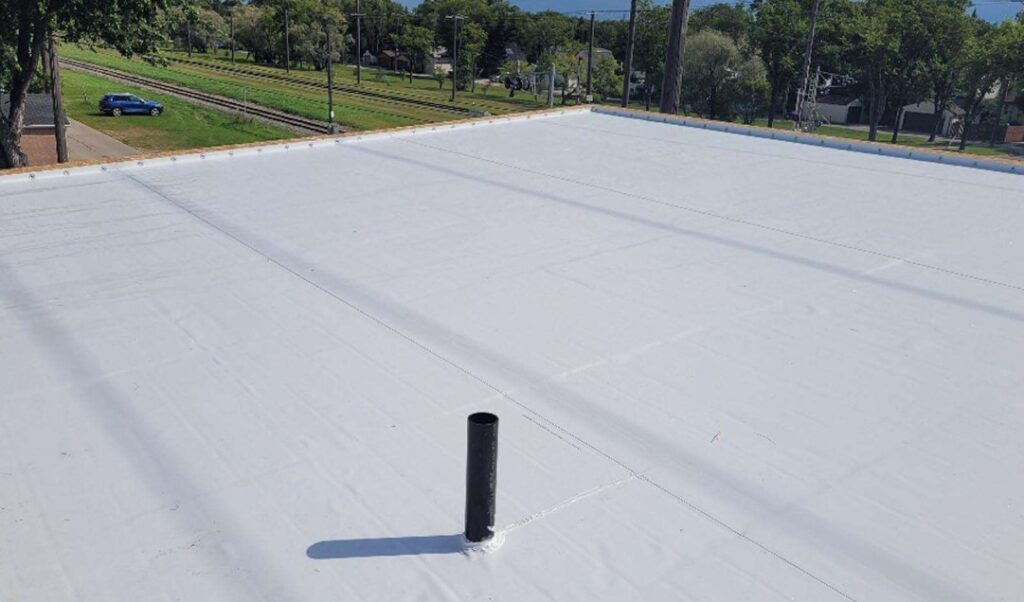
TPO stands for thermoplastic polyolefin. It’s a single-ply membrane roofing system most commonly used on flat and low-slope roofs. Commercial buildings across North Georgia use it widely, but it’s increasingly specified for residential flat roof sections as well.
Why it’s a green choice:
TPO is almost always installed in white or light gray. That reflective surface bounces a significant portion of solar radiation back into the atmosphere rather than absorbing it. The EPA’s Energy Star program recognizes white TPO as a cool roof material that can reduce roof surface temperatures by up to 50 degrees Fahrenheit compared to conventional dark roofing.
In practical terms, a commercial building or home with a white TPO roof uses noticeably less energy to cool interior spaces during Georgia’s summer months. Studies have shown that cool roof membranes can reduce cooling energy use by 10 to 20 percent depending on the building type, insulation levels, and climate.
Environmental credentials:
TPO is 100 percent recyclable. At end of life, the membrane can be reclaimed and reprocessed rather than going to landfill. Several major TPO manufacturers have formal take-back and recycling programs.
TPO also doesn’t contain chlorine, which makes it a cleaner choice than some other single-ply options. It doesn’t require the adhesives and solvents that some roofing systems do, which reduces VOC emissions during installation.
Lifespan and performance:
A properly installed TPO roof lasts 20 to 30 years. That’s a competitive lifespan for a flat roof system, and it means fewer replacement cycles over the life of the building. Heat-welded seams create a watertight bond that’s more durable than seam tape alternatives, and the membrane handles UV exposure, ponding water, and thermal movement well.
Metal Roofing: Built to Last, Built Green
Metal roofing has been used for over a century, but the modern version is a very different product from the corrugated agricultural sheets most people picture.
Standing seam metal roofing, stone-coated steel, and aluminum roofing systems are durable, attractive, and among the most environmentally friendly options available for residential roofs.
Why it’s a green choice:
Metal roofing reflects solar radiation far more effectively than asphalt shingles. With the right coating, a metal roof can have a solar reflectance index (SRI) that qualifies it for Energy Star certification, meaning it reflects enough heat to meaningfully reduce cooling loads.
In Georgia’s climate, this matters considerably. A well-specified metal roof with a reflective coating can reduce peak cooling demand by 10 to 25 percent compared to a standard dark asphalt shingle roof. Over the course of a Georgia summer, that’s a real number on a real utility bill.
The recyclability advantage:
This is where metal roofing genuinely separates itself from almost every other roofing material.
Most metal roofing is manufactured from a significant percentage of recycled content. Steel roofing typically contains 25 to 95 percent recycled steel. At the end of its service life, the metal is fully recyclable again. It doesn’t end up in a landfill the way asphalt shingles do.
The National Association of Home Builders estimates that over 20 billion pounds of old asphalt shingles go to landfill in the United States every year. Metal roofing creates a fundamentally different end-of-life story.
Lifespan:
This is the most compelling green argument for metal roofing. A properly installed standing seam metal roof lasts 40 to 70 years. A standard asphalt shingle roof in Georgia’s climate typically needs replacement every 15 to 25 years.
That means a homeowner who chooses metal may never need another roof in their lifetime. One roof instead of two or three is a significant reduction in material use, manufacturing energy, and installation waste.
Storm performance in North Georgia:
Metal roofing earns Class 4 impact resistance ratings, the highest available, and handles the kind of hail events that regularly affect the Braselton, Winder, and Gainesville areas without the granule loss and bruising that shortens asphalt shingle life after a major storm.
Roof Coatings: The Green Upgrade That Doesn’t Require a New Roof
Roof coatings are one of the most underappreciated options in eco-friendly roofing, and they deserve more attention from Greater Atlanta homeowners and property managers.
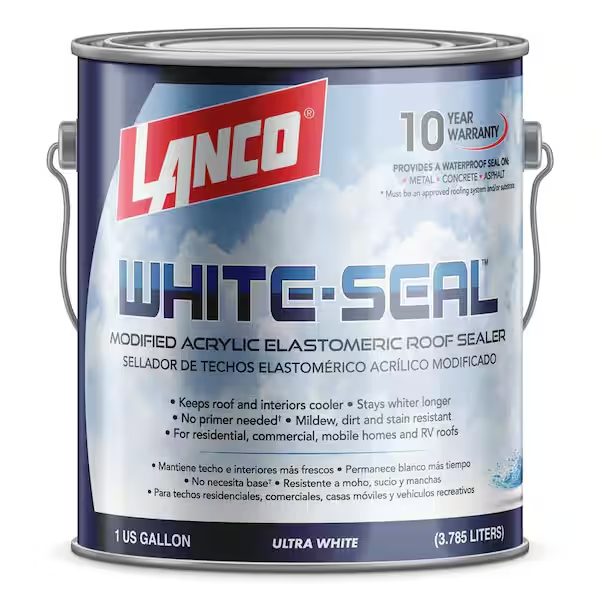
A roof coating is a fluid-applied membrane that goes directly over an existing roof surface. It restores, seals, and reflectizes the roof without the need for tear-off and replacement. Done correctly, it extends the roof’s service life by 10 to 20 years.
Why it’s green:
The environmental math on roof coatings is compelling. A tear-off and replacement generates significant waste: old shingles, underlayment, packaging, and all the associated transportation and manufacturing energy of the new materials. A coating avoids all of that.
No tear-off means no material going to landfill. It also means lower labor intensity and shorter project timelines, which reduces the overall energy cost of the work.
White elastomeric coatings, the most common type for steep and low-slope applications, have high solar reflectance and thermal emittance values. Like TPO, they qualify as cool roof materials and can meaningfully reduce cooling loads in Georgia’s summer climate.
What coatings work on:
Elastomeric roof coatings can be applied to a wide range of existing roof surfaces, including:
- Metal roofs showing early signs of rust or oxidation
- Modified bitumen and built-up flat roofs
- Concrete and foam roofs
- Some single-ply membrane systems
Asphalt shingle roofs are generally not candidates for fluid-applied coatings, but all other roof types listed above can benefit from the right product applied by a qualified contractor.
One important note:
Coatings are not a substitute for structural repair. A roof with significant underlying damage, failed seams, or compromised decking needs those issues addressed before a coating is applied. A coating applied over a failing substrate doesn’t fix the underlying problem. It’s an extension tool for roofs that are fundamentally sound but showing surface wear.
Which Green Option Is Right for Your Greater Atlanta Home?
Here’s a simple way to think about the decision.
Choose TPO if you have a flat or low-slope roof section on a commercial building or home addition, and your priority is maximum solar reflectance and recyclability at a competitive price point.
Choose metal roofing if you’re replacing a residential or commercial roof and want the longest possible service life, the best storm resistance, and a material that can be recycled at end of life. It’s the highest upfront cost of these three options, but the lowest lifetime cost.
Choose a roof coating if your existing roof is structurally sound but showing surface wear, and you want to extend its life, improve its reflectance, and avoid the cost and waste of full replacement. It’s the fastest, most affordable path to a greener roof.
All three options perform meaningfully better in Georgia’s heat than standard dark asphalt shingles. All three reduce cooling loads. And all three have stronger environmental profiles over their full service life.
Make Your Next Roof Your Most Efficient One Yet
Your roof is a long-term investment. The material you choose today determines your energy costs, your maintenance schedule, and your environmental footprint for decades to come.
Greater Atlanta homeowners who choose TPO, metal, or roof coatings aren’t just making a green choice. They’re making a financially sound one. Lower utility bills, fewer replacements, and better storm performance add up to real savings over the life of the roof.
The team at Alpine Roofing & Restoration is ready to help. Contact us today to discuss which eco-friendly roofing option is right for your Greater Atlanta home or commercial property, and get an honest assessment of what each choice means for your budget and your building.